Bodyweight conditioning for BJJ
No gym. No equipment. No excuses. This bodyweight conditioning circuit builds the cardio, muscular endurance, and mental toughness you need for BJJ using movements you can do in your living room, garage, or hotel room.
The workout consists of 6 bodyweight exercises performed for 40 seconds each with 20 seconds rest between them. Complete 4 rounds with 1 minute rest between rounds. Total time: roughly 25 minutes including a warm-up.
Every exercise in this program was chosen because it directly transfers to the mat. Sprawls build takedown defense reflexes. Hip escapes build the most fundamental BJJ movement pattern. Hindu push-ups develop the pressing endurance and shoulder mobility you need for frames and top pressure.
Why bodyweight conditioning for BJJ?
BJJ is a bodyweight sport. You move your own body against another person's body. Training with your own bodyweight develops the movement patterns, endurance, and body control that transfer directly to the mat. No translation required.
The 40-seconds-on, 20-seconds-off format mirrors the rhythm of rolling. You work hard, get a brief moment to recover, then go again. Over 4 rounds, the fatigue accumulates exactly like it does in a tough sparring session. Learning to maintain form and output under that kind of fatigue is what separates grapplers who fade in the last round from those who finish strong.
This workout is also perfect for travel days, rest days when you still want to move, or periods when you can't get to the gym. Consistency beats intensity. A bodyweight circuit you actually do three times a week will build more conditioning than a gym workout you skip because you couldn't make it.
TRAINING TIP: Use any interval timer app. Set 40 seconds work, 20 seconds rest, 6 exercises, 4 rounds, with 1 minute rest between rounds. Start the timer and follow along.
The bodyweight conditioning circuit
Warm-up (3-5 minutes)
- •Joint mobility: Arm circles, hip circles, neck rolls, wrist rotations (2 minutes)
- •Dynamic movement: Jumping jacks, high knees, leg swings (1-2 minutes)
- •Movement prep: 5 slow sprawls, 5 slow push-ups, 5 bodyweight squats (1 minute)
Circuit format
Complete 4 rounds of:
- 1.Sprawls: 40 seconds work, 20 seconds rest
- 2.Hindu push-ups: 40 seconds work, 20 seconds rest
- 3.Bodyweight squats: 40 seconds work, 20 seconds rest
- 4.Hip escapes (shrimps): 40 seconds work, 20 seconds rest
- 5.Burpees: 40 seconds work, 20 seconds rest
- 6.Plank hold: 40 seconds work, 20 seconds rest
Rest 1 minute between rounds. Total: 4 rounds × 6 minutes + 3 minutes rest + 5 minute warm-up ≈ 25-30 minutes
Exercise overview
| Exercise | Sets | Reps | Rest | Comments |
|---|---|---|---|---|
| Sprawls | 4 | 40 sec | 20 sec | Explosive hip drive to the mat. Get back to your feet fast. This is your takedown defense cardio. |
| Hindu push-ups | 4 | 40 sec | 20 sec | Flow from downward dog through a low sweep to upward dog. Builds pressing endurance and shoulder mobility. |
| Bodyweight squats | 4 | 40 sec | 20 sec | Full depth, controlled tempo. Drive through your heels. Go for consistent reps, not speed. |
| Hip escapes (shrimps) | 4 | 40 sec | 20 sec | Alternate sides. Focus on driving off your foot and turning your hips fully. This is a BJJ movement drill and conditioning in one. |
| Burpees | 4 | 40 sec | 20 sec | Chest to floor, explosive jump at the top. The conditioning engine of the circuit. Pace yourself across all 4 rounds. |
| Plank hold | 4 | 40 sec | 20 sec | Elbows under shoulders, glutes and core tight. No sagging. This is active recovery before the next round. |
PACING: The goal is consistent output across all 4 rounds. If you do 12 burpees in round 1, aim for 10-12 in round 4. Don't sprint round 1 and crawl through round 4. Controlled intensity beats chaotic effort.
Detailed exercise breakdown
Exercise 1: Sprawls (40 seconds)
Start standing. Drop your hips back and down, driving your chest toward the floor while kicking your legs back. Your hips should hit the ground and your legs should extend behind you. Immediately pop back up to your feet. This is the exact movement you use to defend a takedown in BJJ. It builds explosive hip extension, cardiovascular conditioning, and the reactive speed you need when someone shoots on you.
Exercise 2: Hindu push-ups (40 seconds)
Start in a downward dog position with your hips high. Swoop your chest down and forward, skimming close to the ground, then press up into an upward dog position. Reverse the movement back to the start. This builds pressing strength, shoulder mobility, and spinal flexibility in one fluid movement. It's far more BJJ-relevant than a standard push-up because it trains movement through multiple planes.
Exercise 3: Bodyweight squats (40 seconds)
Feet shoulder-width apart, squat as deep as you can while keeping your heels on the ground and chest up. Stand up fully at the top. Go for controlled, full-depth reps rather than fast, shallow ones. Squats build the leg endurance you need for takedowns, guard passing, and maintaining base. By round 3, your legs will be burning. Keep going.
Exercise 4: Hip escapes / shrimps (40 seconds)
Lie on your back. Bridge up, turn to one side, and drive off your bottom foot to scoot your hips away. Alternate sides each rep. This is the single most important movement in BJJ. You use it to escape side control, recover guard, and create space from every bad position. Doing it for conditioning means you're building the movement pattern and the endurance to use it when you're exhausted on the mat.
Exercise 5: Burpees (40 seconds)
Drop your chest to the floor, push up, jump your feet to your hands, and jump with your hands overhead. Full range of motion on every rep. Burpees are the conditioning engine of this circuit. They train the ability to go from ground to standing explosively, which is exactly what you do dozens of times in a rolling session. This is where mental toughness gets built.
Exercise 6: Plank hold (40 seconds)
Forearm plank with elbows directly under your shoulders. Squeeze your glutes, brace your core, and hold a straight line from head to heels. No sagging, no piking. This is your active recovery exercise before the next round. It builds the core stability you need for maintaining frames, resisting passes, and holding top position. Focus on controlled breathing during the hold.
INTENSITY GUIDE: Round 1 should feel strong and controlled. Round 2 you'll start feeling the fatigue. Rounds 3 and 4 are where the real conditioning happens. Maintain form even when tired. Sloppy reps don't build fitness, they build bad habits.
Cool down (3-5 minutes)
Walk around for 1-2 minutes to bring your heart rate down. Follow with static stretching focusing on hip flexors, hamstrings, shoulders, and lower back. Hold each stretch for 30-60 seconds. This helps with recovery and keeps you mobile for your next BJJ session.
How to scale this workout
This circuit scales easily for all fitness levels. Adjust the variables to match where you are today, then progress over time.
Make it easier
- •Reduce rounds: Start with 2-3 rounds instead of 4. Add a round each week as your fitness improves.
- •Shorter work periods: Do 30 seconds work, 30 seconds rest instead of 40/20.
- •Modify exercises: Replace burpees with squat thrusts (no jump). Do push-ups from your knees. Hold plank for as long as you can and rest the remainder.
- •Longer rest between rounds: Take 2 minutes between rounds instead of 1.
Make it harder
- •Add rounds: Do 5-6 rounds for a longer conditioning session.
- •Longer work periods: Go 50 seconds work, 10 seconds rest for a brutal conditioning stimulus.
- •Add a weighted vest: If you have one, a 10-20lb vest significantly increases the demand on every exercise.
- •Reduce rest between rounds: Cut round rest to 30-45 seconds to keep your heart rate elevated.
PROGRESSION TIP: Start at a level where you can complete all rounds with good form. Once you can finish 4 rounds without your form breaking down, progress by adding a round or extending the work period. Don't rush progressions. Consistency over weeks beats intensity on any single day.
How to fit this into your training
This bodyweight circuit is designed to complement your BJJ training, not replace it. Here's how to integrate it into your week:
- •2-3 times per week: On days you don't train BJJ. This is the sweet spot for building conditioning without interfering with mat time.
- •Morning sessions: Do the circuit in the morning if you have BJJ in the evening. The low-impact nature of bodyweight work means you'll recover in time for rolling.
- •Travel days: This is the perfect workout when you're away from your gym. All you need is enough floor space to lie down in.
- •Competition prep: Use it 2-3 times per week in the early weeks of a training camp, then taper to 1-2 times as the event approaches.
RECOVERY NOTE: This circuit is less taxing on your joints than weighted training, but it still creates fatigue. If you're training BJJ 4-5 times per week, stick to 1-2 conditioning sessions to avoid overtraining. Quality mat time always comes first.
Simple, effective, no excuses
The best conditioning program is one you actually do. This circuit takes 25 minutes, requires zero equipment, and builds the specific fitness you need for BJJ. No gym membership. No special gear. Just you and the floor.
Every exercise transfers directly to the mat. Sprawls make your takedown defense sharper. Hip escapes make your guard recovery faster. Burpees build the gas tank you need for late rounds. And the mental toughness you develop pushing through rounds 3 and 4 when your legs are on fire carries straight into competition.
Set a timer, clear some floor space, and get to work. See you on the mats.
More training programs
Explore other free training programs designed to complement your BJJ training.
BJJ strength: 1-3 day plan
Basic strength program for BJJ
BJJ kettlebell workout
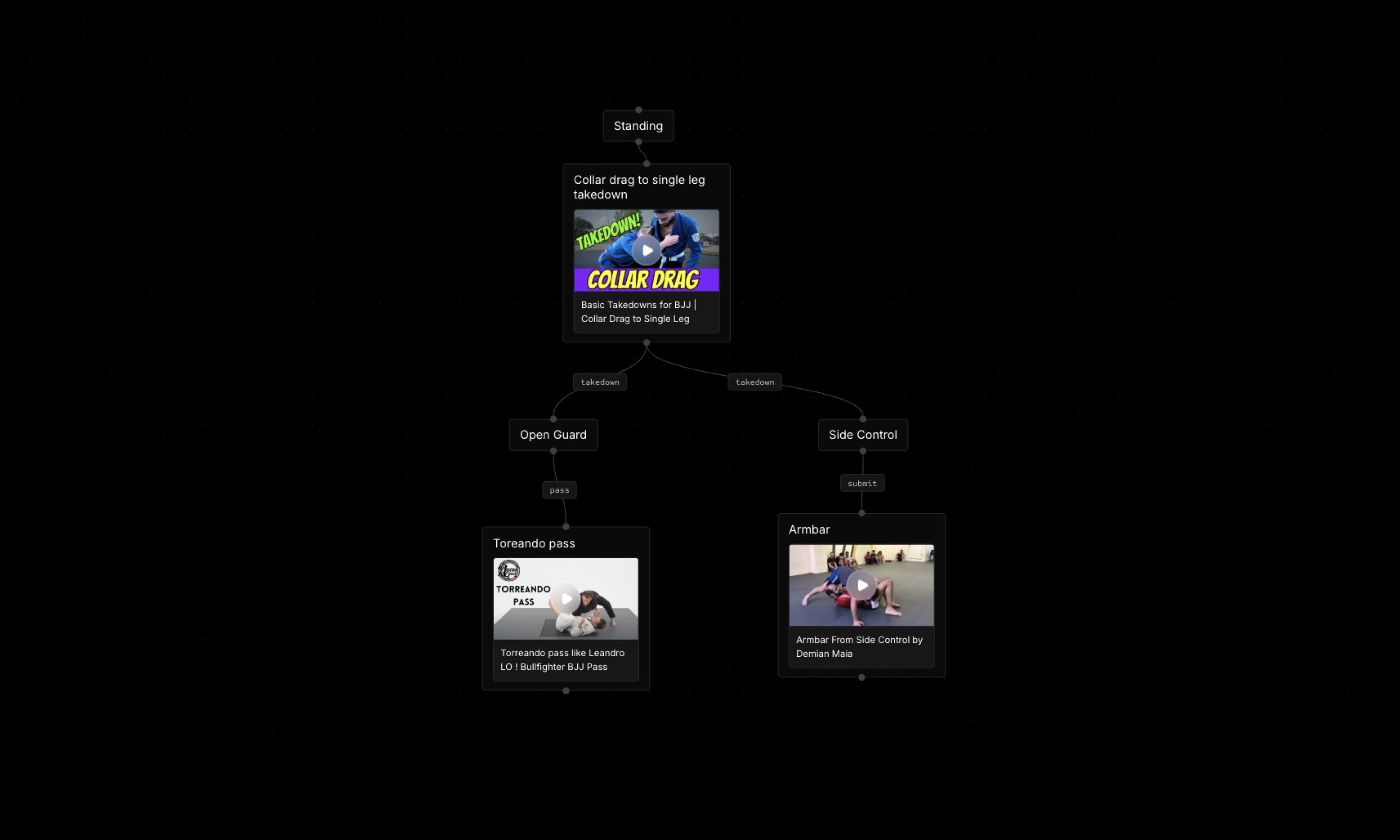
Visualise your game plan
Build flowcharts of positions, techniques, and transitions to map out your BJJ strategy
Create visual flowcharts with positions and techniques
Connect transitions and map decision trees
Link instructional videos and resources to each move